Sahib Salaam Travels made one at a time · India
The western group of temples at Khajuraho
A zone · Madhya Pradesh & the Uttar Pradesh border

Bundelkhand

Khajuraho, Panna and Orchha are sold as three stops on a road between airports. They are one country: a thousand years of sandstone, one river, and two dynasties who thought they were building forever. Given ten days, it becomes the best zone in central India. Given three, it's a photograph of a temple.

The shikhara of the Kandariya Mahadeva temple at Khajuraho
A carved flautist in the Khajuraho manner
Jahangir Mahal at Orchha
The zone holdsKhajuraho, Panna, Orchha — and Bandhavgarh if you have four more days
SeasonNovember to March. Panna's gates shut through the monsoon.
In byKhajuraho airport, 5 km from the temples
Out byJhansi railhead, 18 km from Orchha — a train, not a flight
Khajuraho to PannaAbout 25 km. Under an hour.
Khajuraho to OrchhaAbout 175 km. Four to five hours, and worth doing in daylight.
Suggested lengthTen nights. Seven works. Three is the version everybody else sells.
GroupTwo to twenty — yours, nobody else's
Who comesMe, throughout. Plus a historian for the temple days and a naturalist for the river.
If you can come in FebruaryThe dance festival puts classical dancers in front of the western group. Rooms go early.

Why this is one trip and not three.

The Chandelas built Khajuraho between roughly 950 and 1050. Five hundred years later the Bundelas built Orchha, forty-odd kilometres of bad road and one river system away. In between the two sits Panna — the plateau they both quarried, the forest they both hunted, and the Ken, which is the reason anything here could be built at all.

So you are not visiting a temple, then a park, then a palace. You are watching one landscape get used three times by three sets of people with different ideas about permanence. Read in that order, over enough days, it becomes an argument rather than a sightseeing list — and the argument is the thing worth the airfare.

Almost nobody does this, because the road makes it look like a transfer. It isn't a transfer. It's the middle of the story.

The usual versionThree nights. Khajuraho in a day, Panna as a half-day safari, Orchha as a lunch stop.
MineTen nights. Same three names.
What the seven buySecond and third visits, the right hours, and nothing at midday
On time

Time at hand is a prerequisite for a good time.

This zone is where I can prove it. Every one of these places has a right hour and a wrong one, and the wrong one is when the coaches come. Khajuraho's sculpture is unreadable in flat noon light and extraordinary at seven in the morning. Panna's river is a different river before eight. Orchha's cenotaphs only work from the water, in the twenty minutes before the sun goes.

A three-night itinerary can only ever hit one of those hours by luck. A ten-night one hits all of them on purpose, and still leaves you two afternoons with nothing in them at all — which is not slack, it is the point. The afternoon you spend doing nothing in Orchha is the afternoon you will describe when someone asks about the trip.

If you don't have ten days, say so and I'll build you seven honestly. If you have four, I'd genuinely rather send you to one place than give you this one badly.

The three places in it

What each one is actually for.

Khajuraho

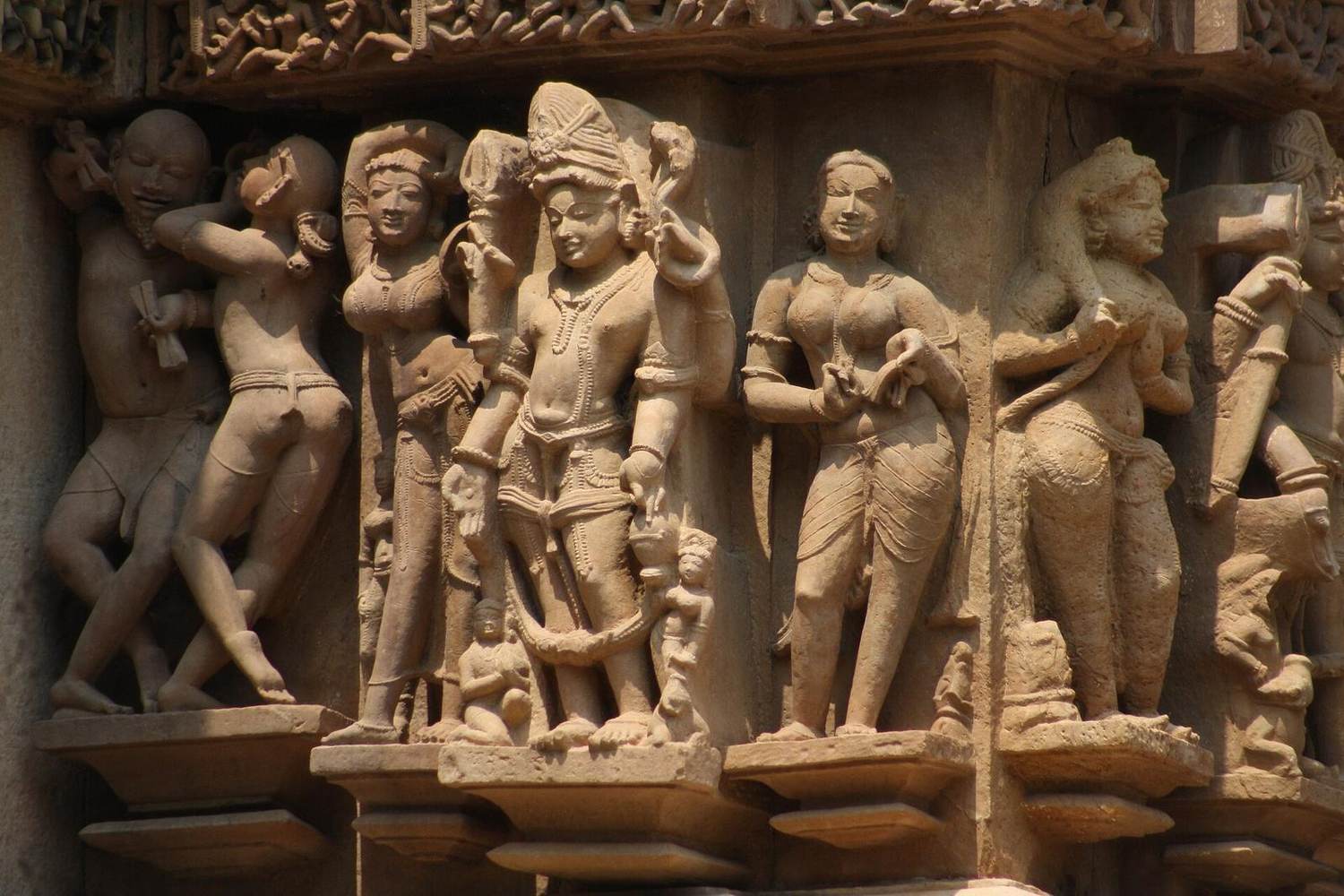
Not the temples you've been told about. Around twenty-five survive of an original eighty-odd, built by the Chandelas in a hundred-year burst and then left alone in the forest for centuries. Yes, there is erotic sculpture — it is perhaps a tenth of what is carved there, and treating it as the subject is like visiting a library for the marginalia.

What's actually on those walls is everyone: musicians, soldiers, a woman removing a thorn from her foot, a man writing a letter, elephants misbehaving. And above them the shikhara of Kandariya Mahadeva rises about thirty metres in deliberate imitation of a mountain range, because the building is an argument about where gods live. Three visits over three days, always early, with someone who can read it. The Jain temples in the eastern group get their own morning and almost nobody gives them one.

Panna

The park that lost every tiger it had, and got them back. By around 2009 Panna had none — poached out, completely. Tigers were brought in from other reserves and the population was rebuilt from effectively zero. It worked, which almost never happens, and it is the single best conservation story in India that nobody tells tourists.

And it may now be partly drowned. The Ken–Betwa river-linking project involves submerging a portion of the reserve, and the argument over it is live, bitter and unfinished. I'll put you in front of people on more than one side of it. You came for a tiger; you'll leave with an opinion about water, which is the better souvenir.

The Ken itself deserves a morning on the water — gharial on the banks, and a gorge that explains why the Chandelas had good stone.

Orchha

A capital that was abandoned rather than destroyed. Founded by the Bundelas around 1531 and left largely alone since, which is why it feels less like a monument and more like a town that lost its job. Jahangir Mahal, built to receive a Mughal emperor for a visit; the Raja Mahal murals; a line of cenotaphs standing in the Betwa at Kanchana Ghat.

And the strangest thing in the zone: at Ram Raja, Ram is worshipped not as a god but as a reigning king. The idol was meant for the great Chaturbhuj temple next door and could not be moved, so the palace became the temple — and the king receives a guard of honour, with an armed salute, daily. It is the only place in the country where the state salutes a deity as a head of state. Two nights minimum. Almost nobody stays two nights.
ExperiencesNot sights. Specific things, at specific hours, usually with a specific person.
Fixed by the sunFour of the five below
What I build the days around

Five hours that are the actual reason to come.

Everything else in the ten nights is arranged so that these five land properly. This is the part no itinerary sold by the kilometre can give you.

07:00, day two

The western group, at opening, with a historian. Before the light goes flat and before the crowd. Two hours with someone who has published on the Chandelas, who will spend the first ten minutes taking the erotica question off the table so you can look at what's actually there.

Dawn, day five

The Ken by boat. Out before eight, low and quiet, gharial on the sandbanks. Then the gorge, and the explanation of what the river link would flood, from the person you actually take people to.

A jeep, day six

Panna with someone who was there in 2009. Not a tiger hunt — a walk-through of how you rebuild a population from nothing, told by name the forester or biologist you use. If a tiger appears, and it often does, that's a bonus rather than the brief.

Sunset, day eight

The cenotaphs from the Betwa. Twenty minutes of usable light, from a boat, with the chhatris between you and the sun. Then walk back through the town while it cooks its dinner.

Evening, day nine

Ram Raja, when the king is saluted. Go for the aarti and stand at the back. It is loud, crowded and entirely unstaged, and understanding what you're watching requires someone to have explained the king business first — which is why it goes on day nine and not day one.

This is a sketchNot an itinerary. Yours will be different by the second conversation.
Two afternoonsDeliberately empty. Don't let me fill them.
A shape, not a schedule

What ten nights has looked like.

Written out so you can see how I think about time, not so you can buy it. Every one of these has moved for somebody.

Nights 1–3

Fly into Khajuraho. Nothing on the first afternoon but the hotel and a walk. Then two early mornings at the temples — the western group on the first, the Jain temples in the eastern group on the second — with the historian both times. Middays are free and will be hot even in December.

Nights 4–6

Under an hour to Panna, which feels like cheating. The river at dawn one day, the forest the next, the gorge and the falls on the third. An afternoon with nothing in it. This is the quietest stretch of the trip and the one people are most surprised to have loved.

Night 7

The drive west to Orchha, in daylight, unhurried, stopping when something deserves it. Arrive for the late afternoon. Nothing planned that evening.

Nights 8–10

Orchha properly: the palaces early, the Betwa at dusk, Ram Raja in the evening, the murals when the light is right for them. One more empty afternoon. Out by train from Jhansi, which is a better last morning than an airport.

If you have four more

Bandhavgarh sits about six hours east of Khajuraho and is the natural extension — as good a chance of a tiger as anywhere in India, and an old fort on the plateau above the park that almost nobody looks up at. Fourteen nights, and a different kind of trip. Confirm whether you run this as one journey or two.

The Pandav caves and falls, near Panna
KhajurahoName the property you actually use
PannaWhich lodge, and which gate it sits near
OrchhaThe heritage property, or the tents by the river
Where you sleep

This is the zone where I can actually give you comfort.

Unlike some places I take people, Bundelkhand has real hotels — a handful of properties with proper rooms, cold beer, and food worth staying in for. In Panna there are lodges on the park's edge that get the details right. In Orchha you can sleep inside a heritage building or in canvas by the Betwa, and I'd push you towards the canvas for one of the three nights.

What I'll spend your money on, in order: the distance from your bed to the temple gate at half past six, then the food, then the view. Beautiful properties an hour from where you need to be at dawn are how good itineraries quietly fail.

Indicative₹0,00,000 per person, ten nights, party of six
IncludedList it plainly — say whether the historian and the safaris are in
Not includedList this plainly too
What it costs

I'll give you a number, and then show you how it was built.

Because nothing here is a package, the price moves with the group. Six share the vehicles and the historian between them; two do not, so two costs more a head, and I'd rather you heard that from me than worked it out afterwards. Above about twelve we need a second vehicle and a second pair of hands, and there's a step in the cost there too.

This zone is less time-pressured than Nagaland — rooms exist, and you can decide in September for a January trip. The two exceptions are late February, when the dance festival fills Khajuraho, and the fortnight around New Year.

Put a real indicative figure in the margin. A band — "from X per person" — is enough. Refusing to publish any number at all reads as evasive to exactly the people you want.

Bundela cenotaphs on the bank of the Betwa at Orchha
Plainly

Who this zone is not for.

  • Anyone who has three days. I'm not being difficult — I'll tell you which single one of the three to spend them on, and it's usually Orchha.
  • Anyone who can't get up at six. Four of the five hours that matter here are before eight in the morning or after five in the afternoon.
  • Anyone coming to Khajuraho for the erotic sculpture. You'll get a tenth of what you hoped and a historian who'd rather talk about roof structure.
  • Anyone who wants a tiger guaranteed. Panna will probably show you one. Bandhavgarh is the better bet, and it's four more days.
  • Anyone who needs every afternoon filled. Two of them won't be, on purpose, and I'll defend that.
Write tohello@sahibsalaam.com
Or call+91 99101 40604
Lead timeA few months is enough, except around the dance festival
Begin a conversation

Tell me how many days you actually have, and I'll tell you honestly what they're worth here.

The number of days is the first thing I need and the last thing most people volunteer. Start there and the rest of the conversation is easy.