The zone holdsKargil & Suru · Zanskar · the Indus and Alchi · Leh · Nubra & Turtuk · the Changthang & Hanle
SeasonMid-June to early October, when every pass is reliably open. Late June to September is the safe middle.
In bySrinagar, over Zoji La — by road, on purpose
Out byA flight from Leh, once you're acclimatised enough to enjoy the last week
Suggested lengthEighteen nights. Fourteen drops Zanskar. Ten is the version everybody else sells.
Lowest nightKargil, about 2,700 m
Highest nightHanle, about 4,250 m — on night fifteen, not night four
Highest roadKhardung La, about 5,360 m. Crossed, not slept on.
GroupTwo to twenty — yours, nobody else's
PermitsInner Line or Protected Area permits for Nubra, Turtuk, Pangong, Tso Moriri and Hanle. Issued in Leh. I arrange them.
Who comesMe, throughout. Plus a scholar for Alchi and an astronomer at Hanle.
If you can come in JulyHemis Tsechu — masked dances, and a crowd that is mostly Ladakhi. Rooms go a year out.
Why a week in Leh is not Ladakh.
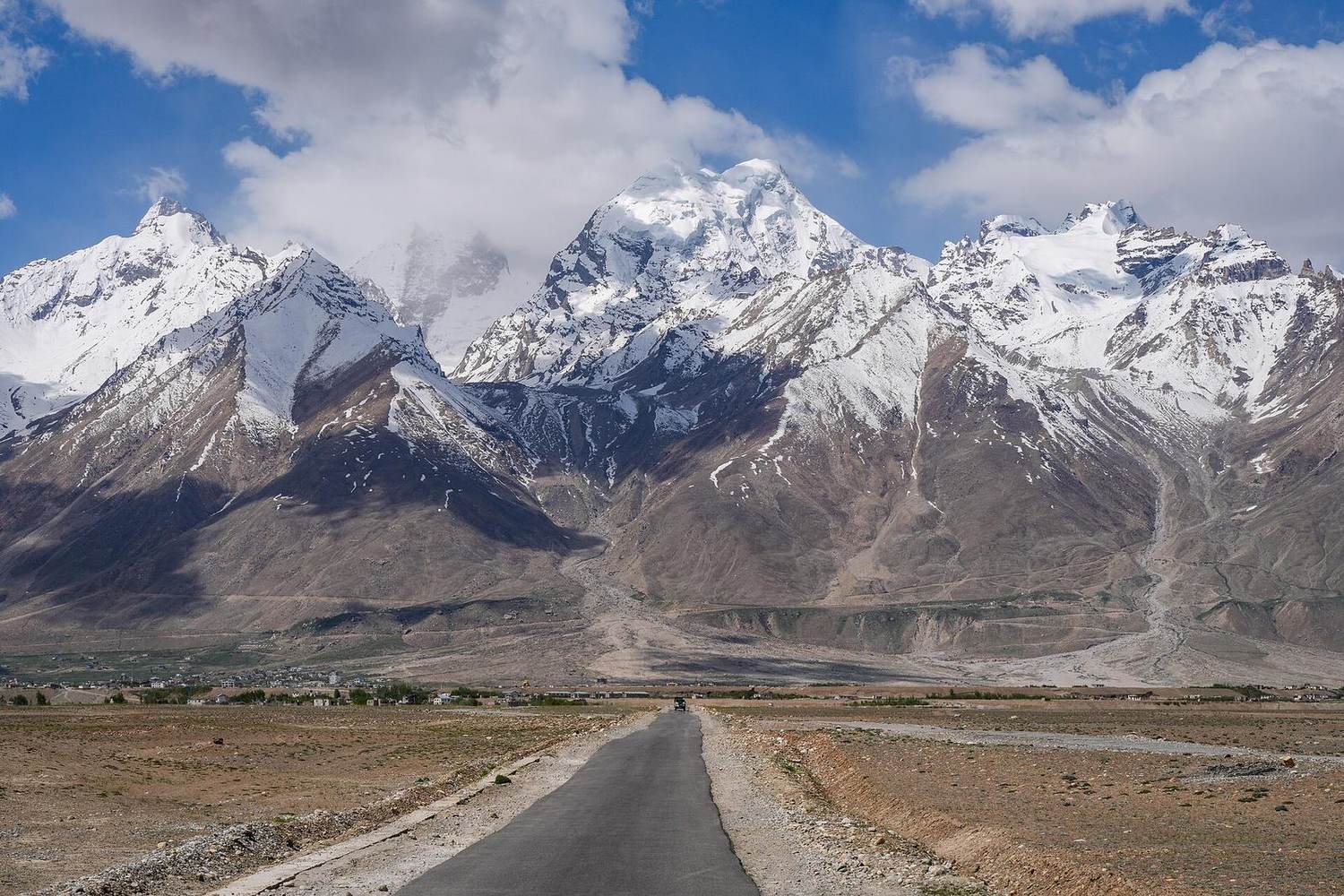
Ladakh is two districts and something like sixty thousand square kilometres. Leh is one town in one valley of it. What gets sold as the Ladakh trip — fly in, Khardung La, Nubra, Pangong, fly out — covers perhaps a tenth of the zone and manages to miss almost everything that makes it strange.
It misses Kargil, which is the other half of Ladakh and is largely Muslim, mostly Shia, and therefore absent from a story the tourism industry prefers to tell entirely in prayer flags. It misses Zanskar, which until recently was a dead end reachable only over one pass. It misses Alchi, which holds the oldest surviving paintings in Ladakh and was made by Kashmiri hands nine hundred years ago. And it misses the sheer emptiness of the Changthang, which is the actual subject of this landscape and cannot be experienced in an afternoon.
One thing has just changed the geometry: the road from Nimmu through Padum to Darcha now runs the whole way. Zanskar stopped being a spur and became a through-route, which means the full zone can finally be travelled as a loop instead of a series of out-and-backs. Most itineraries haven't caught up.